
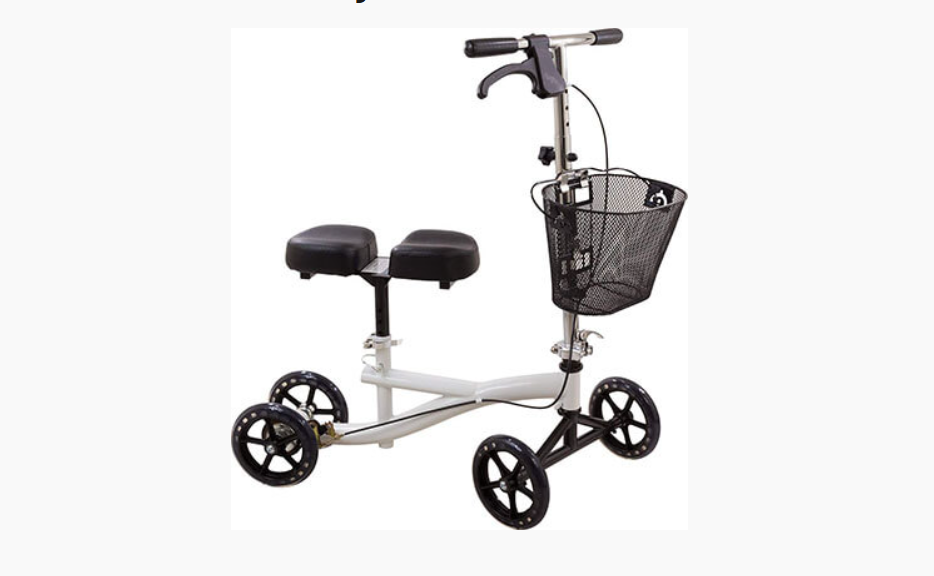
How to use a knee scooter? Dealing with a foot, ankle, or lower leg injury can be incredibly frustrating. Whether you’ve broken a bone, sprained your ankle, or undergone surgery, mobility becomes a major challenge. That’s where a knee scooter comes in a game changing mobility aid that offers far more comfort and freedom than traditional crutches.
If you’ve never used one before, don’t worry. Learning how to use a knee scooter is straightforward, and with a few tips and techniques, you’ll be rolling around confidently in no time. In this comprehensive guide, I’ll walk you through everything you need to know about using a knee scooter safely and effectively.
What Is a Knee Scooter and Why Use One?
How to use a knee scooter A knee scooter, also called a knee walker, is a mobility device that lets you rest your injured leg on a padded platform while you propel yourself forward with your good leg. It’s designed for people who need to keep weight off one foot or ankle but want more mobility than crutches can provide.
The benefits are hard to ignore. Unlike crutches that strain your arms, shoulders, and wrists, a knee scooter lets you move around with minimal upper body effort. You’ll find yourself less tired at the end of the day, and you can actually carry things while you move around something that’s nearly impossible with crutches.
Setting Up Your Knee Scooter Properly
Before you start rolling around, you need to adjust your knee scooter to fit your body correctly. This step is crucial for both comfort and safety when learning how to use a knee scooter.
Adjusting the Knee Platform Height
The knee platform should be at a height where your injured leg can rest comfortably with your knee bent at roughly 90 degrees. When standing on your good leg, your injured knee should sit naturally on the pad without you having to lift your leg uncomfortably high or let it dangle too low.
Most knee scooters have a simple adjustment mechanism usually a quick-release lever or pin system. Loosen it, slide the knee platform to the right height, and lock it back in place. Make sure it’s secure before putting weight on it.
Handlebar Adjustment
Your handlebars should be at a height that allows your elbows to bend slightly when you’re holding them. If they’re too high, you’ll strain your shoulders; too low, and you’ll be hunched over uncomfortably. The ideal position lets you stand upright with a relaxed posture.
Check the Brakes
Most knee scooters have hand brakes similar to a bicycle. Squeeze them a few times to make sure they’re working properly and engaging the wheels. Some models also have a parking brake familiarize yourself with how it works before you need it.
How to Use a Knee Scooter: Step by Step Instructions
Now that your knee scooter is adjusted, let’s talk about actually using it. Understanding how to use a knee scooter begins with mastering the basics. The first time can feel a bit awkward, but you’ll get the hang of it quickly.
Getting On
Start by standing next to your knee scooter. Hold both handlebars firmly with your hands. Carefully lift your injured leg and place your knee on the padded platform. Keep your weight on your good leg initially, and make sure your knee is centered on the pad before fully committing your weight.
Your injured foot should hang naturally behind you, not touching the ground. If you’re wearing a boot or cast, make sure it clears the ground comfortably.
Moving Forward
To propel yourself, use your good leg like you would on a push scooter. Keep one hand on each handlebar for balance and control. Push off with your good foot in smooth, controlled motions. You don’t need to push hard gentle pushes work better and are safer than trying to go too fast.
Start slowly. Practice moving forward in a clear, open area before attempting to navigate tight spaces or busy environments. You’ll naturally develop a rhythm after a few minutes.
Steering
Steer by turning the handlebars, just like riding a bike. The key is to make gradual turns rather than sharp ones, especially when you’re first learning how to use a knee scooter. Lean slightly into your turns for better control, but don’t overdo it—you want to stay balanced.
Stopping
To slow down or stop, squeeze the hand brakes gradually. Don’t grab them suddenly, as this could cause the scooter to stop abruptly and throw you off balance. When parking, engage the parking brake if your model has one.
Getting Off
When you’re ready to dismount, come to a complete stop and engage the parking brake. Keep both hands on the handlebars, then carefully lift your injured leg off the knee platform and place your good foot on the ground. Step away from the scooter only when you’re stable.
How to Use a Knee Scooter with a Boot
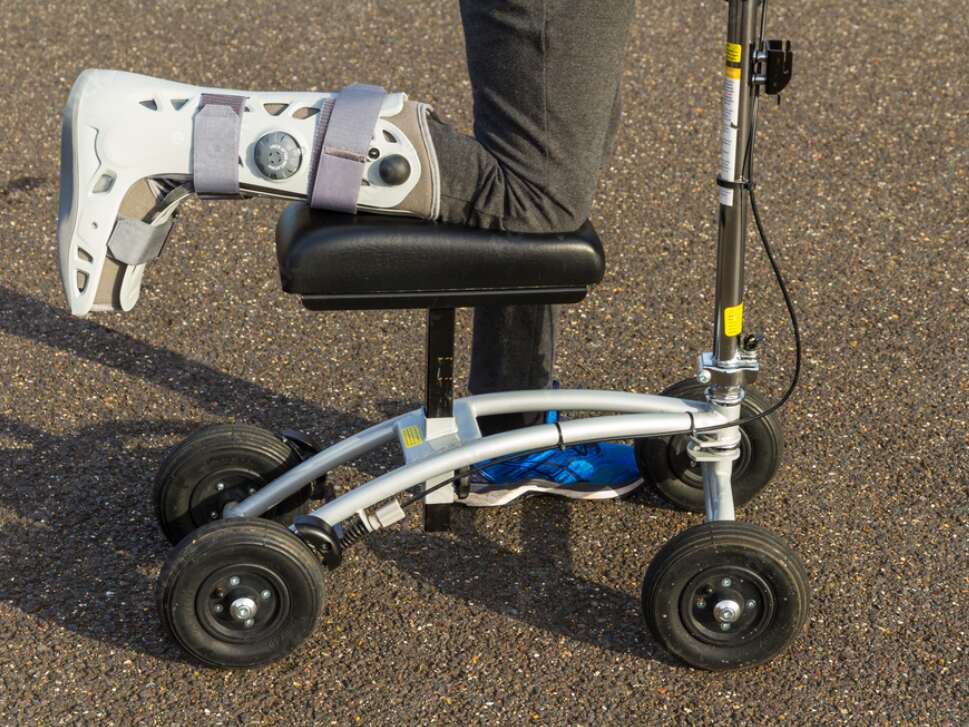
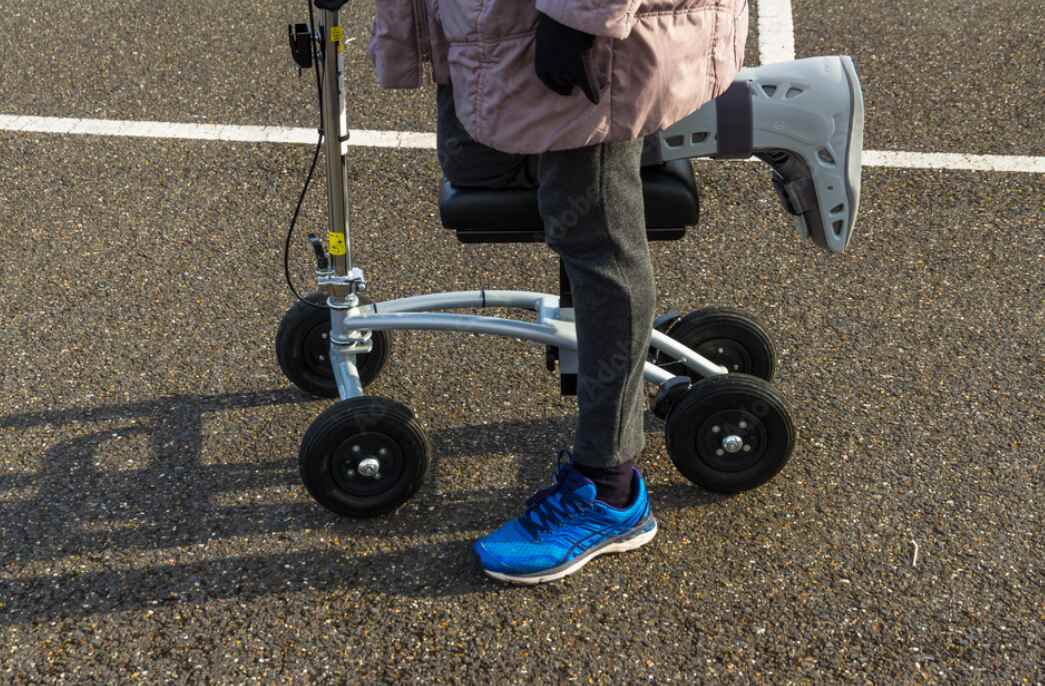
If you’re recovering from an injury that requires a walking boot, using a knee scooter is still perfectly manageable in fact, it’s often the recommended approach. Knowing how to use a knee scooter with a boot ensures your recovery stays on track.
Boot Positioning
When using a knee scooter with a boot, your booted foot should rest on the knee platform with the boot extending behind you. The boot shouldn’t touch the ground at all. If your boot is particularly large or bulky, you might need to adjust your knee platform height slightly higher to ensure adequate clearance.
Weight Distribution
The boot adds weight to your injured leg, which can affect your balance slightly. Make sure the boot is secured properly before getting on the scooter. Some people find it helpful to rest their shin on the knee platform rather than just their knee when wearing a heavy boot experiment to see what feels most comfortable and stable for you.
Turning Considerations
A boot can make your injured leg less flexible, so you’ll need to be more mindful when turning. The boot might swing out wider than your leg alone would, so give yourself extra space when navigating corners or tight areas.
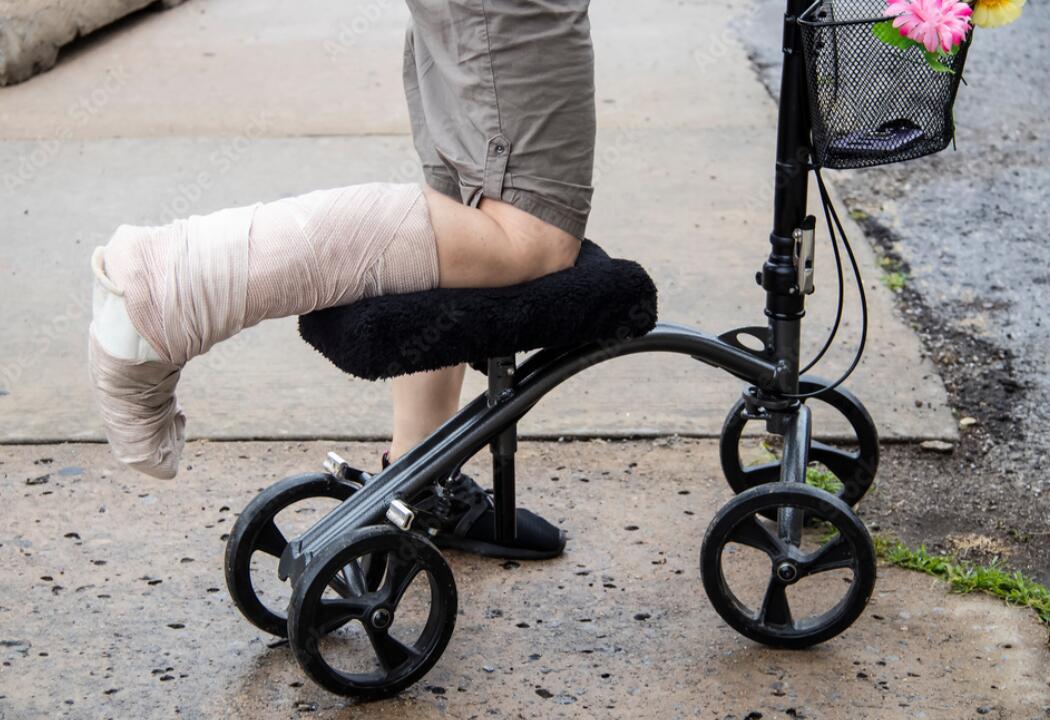
How to Use a Knee Scooter with a Cast: Essential Tips
Using a knee scooter with a cast is very similar to using it with a boot, but there are a few specific considerations. Understanding how to use a knee scooter with a cast helps protect your injury while maintaining mobility.
Cast Care
Your primary concern is keeping your cast clean and undamaged. Make sure the cast doesn’t drag on the ground, which could get it dirty or damaged. Adjust your knee platform height accordingly.
Padding
A cast can feel harder against the knee platform than a boot. Consider adding extra padding or a soft towel to the knee platform for additional comfort. Some knee scooters come with memory foam pads that can make this much more comfortable during long periods of use.
Balance
Depending on where your cast is located (foot, ankle, or lower leg), you might find your balance differs from using the scooter without a cast. The cast adds weight and changes your center of gravity slightly. Take extra time to practice and get comfortable with how the scooter handles with your cast.
How to Use a Knee Scooter on Stairs: Safety Guidelines
Here’s the honest truth: knee scooters and stairs don’t mix well. You cannot ride a knee scooter up or down stairs safely. Learning how to use a knee scooter on stairs or rather, how to navigate stairs while using one requires alternative strategies.
The Safe Approach
When you encounter stairs, you’ll need to dismount from your knee scooter and use an alternative method to navigate them. Many people use crutches or handrails to hop up or down stairs on their good leg. Some prefer to sit and scoot up or down on their bottom. Whatever method you choose, make sure it’s approved by your doctor or physical therapist.
Transporting Your Knee Scooter
For stairs at home, many people keep their knee scooter on the floor they use most and keep a pair of crutches available for when they need to change floors. Some knee scooters fold for easier storage and transport.
If you must move your knee scooter up or down stairs regularly, ask a family member or friend to help carry it. Most knee scooters weigh between 20 and 30 pounds, making them manageable but awkward to carry alone, especially when you’re already dealing with an injury.
Alternative Solutions
If you live in a multi-story home and need to move between floors frequently, consider renting or borrowing a second knee scooter to keep on each floor. Another option is to explore whether a wheelchair or other mobility aid might be more practical for your specific situation.
Some people install temporary ramps over a few steps if their home layout allows it, though this requires careful planning and proper installation to ensure safety.
Safety Tips for How to Use a Knee Scooter
No matter where or how you’re using your knee scooter, safety should always be your top priority. These tips will help you master how to use a knee scooter safely in any environment.
Watch Your Speed
It’s tempting to zoom around, especially once you get comfortable. Resist this urge. Moving too fast reduces your reaction time and increases the risk of accidents. Keep to a controlled, moderate pace.
Be Aware of Surfaces
Smooth, flat surfaces are your friend. Be cautious on uneven pavement, gravel, grass, or any surface that might catch your wheels. Wet surfaces can be slippery, so slow down when it’s been raining.
Small obstacles like door thresholds, cracks in sidewalks, or loose rugs can be hazardous. Approach them straight on at a slow speed, or dismount and step over them if they seem risky.
Clear Your Path
Before moving through an area, scan for obstacles. Kids’ toys, pet bowls, electrical cords, and furniture can all create hazards. Keep pathways in your home clear to reduce the risk of accidents.
Use Proper Lighting
Make sure areas where you’re moving are well lit. It’s harder to spot obstacles in dim lighting, and your reaction time might not be quick enough to avoid them.
Don’t Carry Heavy Items
While one advantage of a knee scooter is that you can carry some items, don’t overdo it. A small bag or lightweight objects are fine, but carrying heavy items can throw off your balance and lead to falls.
Check Your Equipment Regularly
Before each use, do a quick safety check. Are the wheels rolling smoothly? Are the brakes working? Is everything tightened properly? Regular maintenance prevents mechanical failures that could lead to injuries.
Building Confidence and Skill
Like anything new, using a knee scooter gets easier with practice. Don’t be discouraged if you feel wobbly or uncertain at first. Mastering how to use a knee scooter takes time and patience.
Start by practicing in a safe, open space like a hallway or driveway. Get comfortable with basic movements—forward, backward, turning, and stopping. Once you’ve mastered the basics, gradually introduce more challenging environments.
Practice navigating doorways, as they require precision steering. Work on backing up, which is trickier than moving forward but sometimes necessary. Try moving at different speeds so you understand how the scooter handles in various situations.
The more time you spend on your knee scooter, the more natural it will feel. Within a few days, most people find themselves moving confidently and efficiently.
Common Mistakes When Learning How to Use a Knee Scooter
Learning from others’ mistakes can save you frustration and potential injury when figuring out how to use a knee scooter effectively.
Incorrect Height Adjustment
This is the most common error. If your knee platform is too low, you’ll put weight on your injured foot. Too high, and you’ll be uncomfortable and unstable. Take time to get this right from the start.
Looking Down
New users often stare at the scooter while moving. Instead, look ahead where you’re going, just as you would when walking. Your peripheral vision will handle keeping track of the scooter itself.
Over-Gripping the Handlebars
Relax your grip. White-knuckling the handlebars will tire your hands and arms quickly. A firm but relaxed grip gives you better control and comfort.
Rushing the Learning Process
Give yourself time to adapt. Don’t attempt complicated maneuvers or crowded spaces until you’re confident with basic operation.
Tips for Long Term: How to use a knee scooter
If you’ll be using your knee scooter for an extended recovery period, these tips will help you stay comfortable and maintain your equipment.
Invest in Comfort
Consider upgrading your knee pad with additional cushioning if you’ll be using the scooter for weeks or months. A more comfortable pad makes a significant difference during long-term use.
Stay Active Safely
While you’re recovering, it’s important to stay as active as possible within your doctor’s guidelines. Your knee scooter enables you to maintain some independence and mobility, which is crucial for both physical and mental health.
Maintain Your Equipment
Check tire pressure regularly if your scooter has pneumatic tires. Keep all moving parts clean and lubricated. Tighten any loose bolts or screws. Proper maintenance extends the life of your scooter and keeps it operating safely.
Plan Your Routes
When going out, plan wheelchair-accessible routes. These paths will also be easiest for your knee scooter. Call ahead to venues to ask about accessibility and ground floor access.
Returning to Normal Activities
One of the best things about learning how to use a knee scooter is that it allows you to return to many normal activities during your recovery. You can navigate your workplace, visit friends, shop for groceries, and maintain much of your regular routine.
However, always follow your doctor’s advice about activity levels. Just because you can do something with your knee scooter doesn’t mean you should if it might compromise your healing.
Listen to your body. If you experience increased pain, swelling, or discomfort, rest and consult your healthcare provider. The goal is to stay mobile while allowing your injury to heal properly.
Final Thoughts on How to Use a Knee Scooter
Learning how to use a knee scooter properly transforms your recovery experience. With the right setup, good technique, and attention to safety, you’ll find that a knee scooter offers independence and mobility that makes healing much more bearable.
Remember that whether you’re learning how to use a knee scooter with a boot, understanding how to use a knee scooter with a cast, or navigating around stairs, the fundamental principles remain the same: proper adjustment, controlled movement, and safety awareness. Take your time, practice regularly, and don’t hesitate to ask your healthcare provider if you have specific questions about using a knee scooter for your particular injury.
Before you know it, using your knee scooter will feel like second nature, and you’ll wonder how anyone manages recovery on crutches alone. Stay patient with yourself, follow these guidelines, and you’ll be rolling toward recovery with confidence. The key to success is understanding how to use a knee scooter from day one and maintaining good habits throughout your recovery journey.
Frequently Asked Questions About How to Use a Knee Scooter
How to use a knee scooter for the first time?
A: When learning how to use a knee scooter for the first time, start by adjusting the knee platform and handlebars to the correct height. Stand beside the scooter, hold both handlebars firmly, and place your injured knee on the padded platform. Use your good leg to push off gently while keeping both hands on the handlebars for balance. Practice in a clear, open space until you feel comfortable with the basic movements of steering, moving forward, and stopping.
How to use a knee scooter with a boot correctly?
A: To use a knee scooter with a boot, position your booted leg on the knee platform with the boot extending behind you, ensuring it doesn’t touch the ground. You may need to adjust the platform height slightly higher to accommodate the boot’s bulk. The boot adds extra weight, so take time to practice and find your balance. Make wider turns to account for the boot’s size and maintain a controlled speed for safety.
How to use a knee scooter with a cast safely?
A: When learning how to use a knee scooter with a cast, adjust the knee platform height so your cast clears the ground completely to prevent damage or contamination. Add extra padding to the knee platform for comfort, as casts feel harder than boots. The cast changes your center of gravity, so practice in a safe area before navigating regular spaces. Always keep your cast elevated and dry while using the scooter.
Can you use a knee scooter on stairs?
A: No, you cannot safely ride a knee scooter on stairs. When you encounter stairs, you must dismount and use an alternative method like crutches, handrails, or sitting to navigate them. Many people keep their knee scooter on one floor and use crutches for stairs, or they keep a second scooter on each level of their home. Always ask someone to help carry your knee scooter up or down stairs if needed.
How to properly use a knee scooter to avoid injury?
A: To properly use a knee scooter and avoid injury, ensure correct height adjustment for both the knee platform and handlebars. Always use both brakes when stopping, watch for surface hazards like cracks or wet floors, and maintain a moderate speed. Keep your pathways clear of obstacles, use proper lighting, and perform regular equipment checks. Never carry heavy items that could throw off your balance, and always engage the parking brake before dismounting.
How long does it take to learn how to use a knee scooter?
A: Most people learn the basics of how to use a knee scooter within 15-30 minutes of practice. However, becoming fully comfortable and confident typically takes 2-3 days of regular use. Start in a safe, open area and gradually progress to more challenging environments like doorways and tight spaces. With consistent practice, using a knee scooter will feel natural and become second nature.
What surfaces can you use a knee scooter on?
A: Knee scooters work best on smooth, flat surfaces like indoor flooring, sidewalks, and paved pathways. You can carefully use them on low-pile carpet, though it requires more effort. Avoid gravel, sand, grass, steep inclines, and uneven terrain as these can be dangerous. Wet or slippery surfaces require extra caution. Always approach small obstacles like door thresholds straight-on at a slow speed or dismount to step over them.
How do you adjust a knee scooter for proper use?
A: To adjust a knee scooter properly, first set the knee platform height so your injured knee rests comfortably with your leg bent at about 90 degrees when standing on your good leg. Then adjust the handlebars to elbow height, allowing a slight bend in your elbows for comfortable steering. Test both adjustments and make sure all pins or levers are securely locked before putting weight on the scooter. Proper adjustment is essential for safe and comfortable use.
Is it better to use a knee scooter or crutches?
A: A knee scooter is generally better than crutches for most people because it doesn’t strain your arms, shoulders, or wrists, and it allows you to carry items while moving. However, crutches are better for stairs, very tight spaces, and short-term use. Many people use a knee scooter as their primary mobility aid and keep crutches available for stairs. Consult your doctor to determine which option is best for your specific injury and lifestyle.
Can you use a knee scooter with both a cast and a boot?
A: Yes, you can use a knee scooter whether you’re wearing a cast, a boot, or both. The technique is similar for each—adjust your knee platform height to ensure your cast or boot clears the ground, add extra padding if needed for comfort, and take time to adjust to the added weight and bulk. Some people wear a boot over their cast for extra protection while using the scooter. Always follow your doctor’s instructions regarding weight-bearing restrictions.
How to use a knee scooter indoors vs. outdoors?
A: When using a knee scooter indoors, focus on navigating doorways, avoiding furniture, and being cautious on different flooring types. Check for loose rugs or cords that could cause accidents. Outdoors, you’ll encounter uneven pavement, curbs, and weather conditions. Move more slowly outdoors, avoid steep hills, and be extra careful after rain. Indoor use is generally easier and safer for beginners learning how to use a knee scooter.
What are the common mistakes when using a knee scooter?
A: Common mistakes include incorrect height adjustment (the most frequent error), looking down while moving instead of ahead, gripping the handlebars too tightly, moving too fast, and attempting stairs. Other mistakes include not checking brakes before use, carrying too much weight, and rushing the learning process. Taking time to properly set up your knee scooter and practice basic skills prevents most accidents and injuries.
How to use a knee scooter if you’re tall or short?
A: Knee scooters are adjustable for various heights. If you’re tall, extend both the knee platform and handlebars to their maximum height settings, ensuring your knee rests comfortably without straining. If you’re short, lower both adjustments to their minimum settings. The key is maintaining proper posture—your injured knee should rest naturally on the platform, and your elbows should have a slight bend when holding the handlebars, regardless of your height.
Do you need a prescription to use a knee scooter?
A: You don’t always need a prescription to use a knee scooter, but having one can help with insurance coverage or rental reimbursement. Many people rent or purchase knee scooters directly without a prescription. However, it’s important to consult your doctor or physical therapist about whether a knee scooter is appropriate for your specific injury and to get guidance on how to use a knee scooter safely during your recovery period.
How to use a knee scooter without damaging floors?
A: To protect your floors when using a knee scooter, choose a model with non-marking wheels or add wheel covers. Keep the wheels clean and free from debris that could scratch floors. Avoid sudden stops or sharp turns on hardwood or tile, as this can leave marks. Some people place rubber mats in high-traffic areas. Regular wheel maintenance and smooth, controlled movements will minimize any potential floor damage while using your knee scooter.